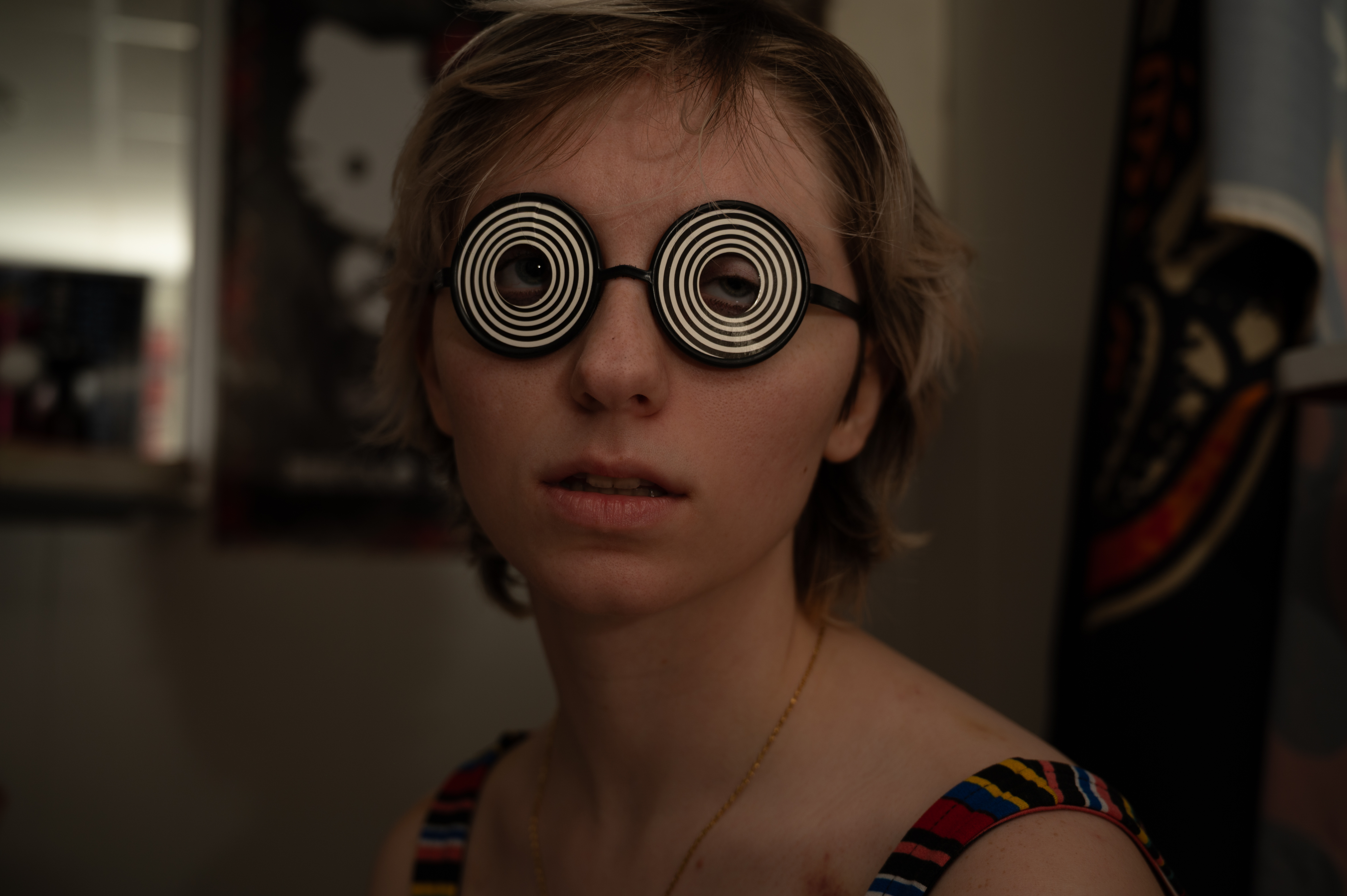
There is no cure for what is inside Willow.
“Art is one of my few escapes.”
Weeping Willow
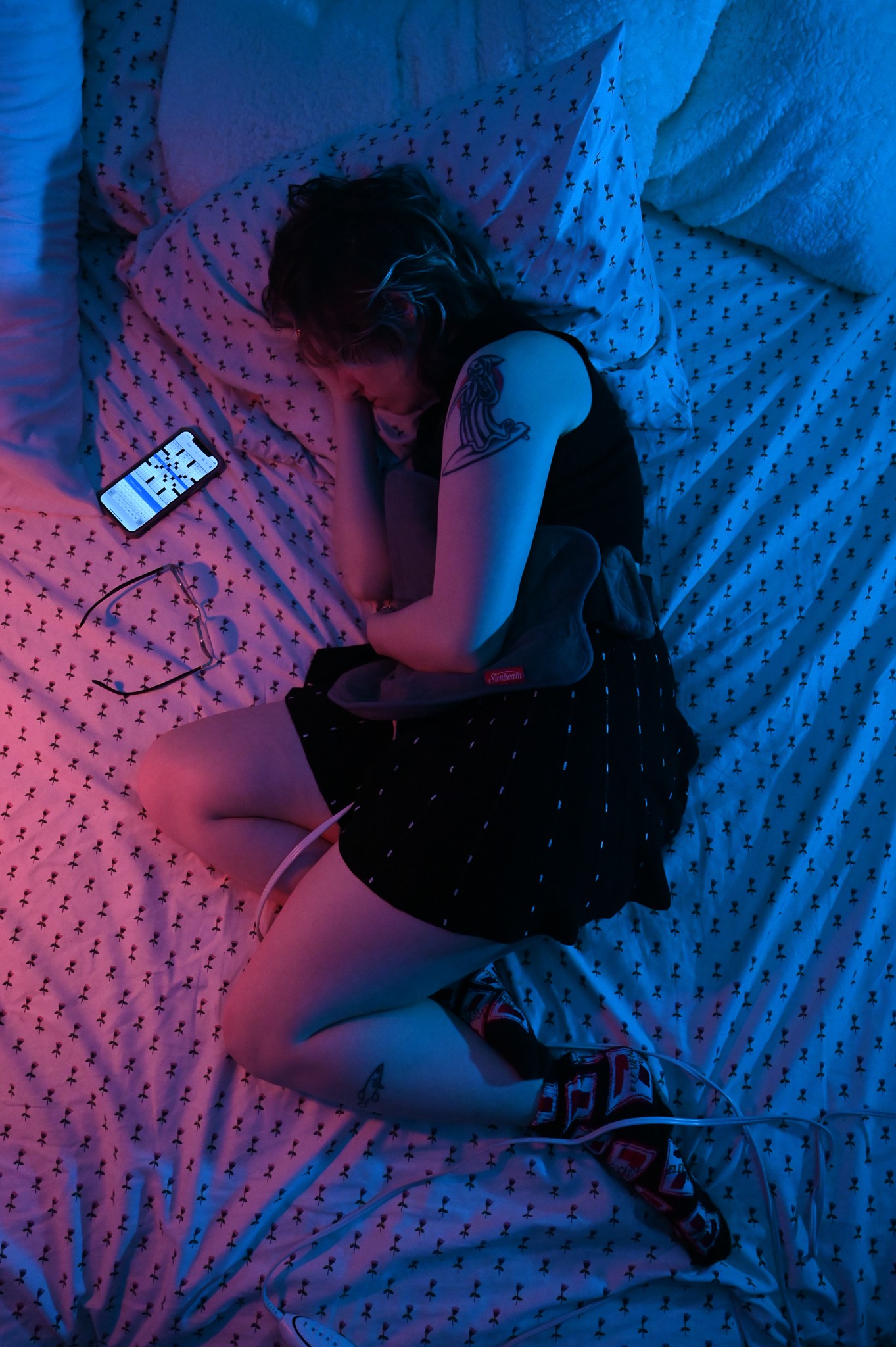
“There’s this heavy pit of dread in my chest that makes it hard to breathe and swallow when I think about my future...”
“I want to wake up without feeling so stiff and heavy and sore for once...”
“What do I do if it keeps getting worse?”
“It hurts, everything hurts.”
“It’s so hard to advocate for myself, people just make you feel like a child...”
“I feel so much shame talking about it...”
“What is wrong with me...”
“If I collapsed at home in agony I’d be alone... and no one would know.”
“What if I am making it up, if it is really all in my head...”
“I just feel so defeated.”
“I just want to feel healthy.”
“I just want it to stop.”
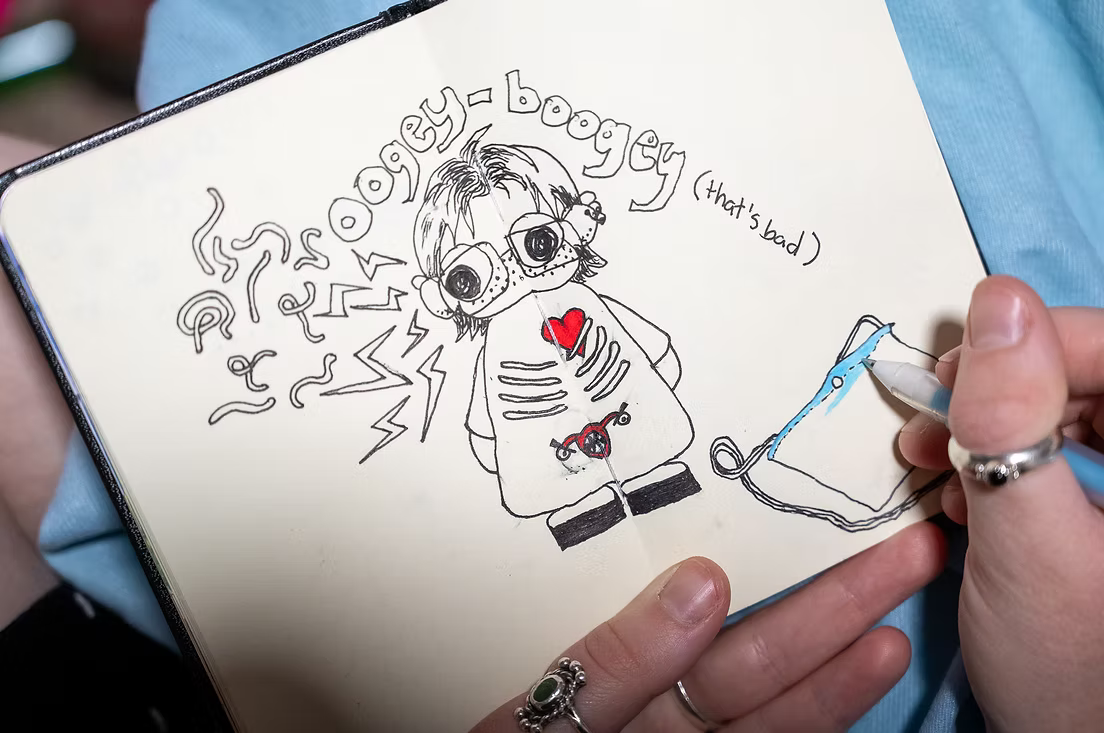
"It became a habit more than a hobby... it was the only thing keeping me sane."
"I don't think I would still be here if I didn't have that outlet."
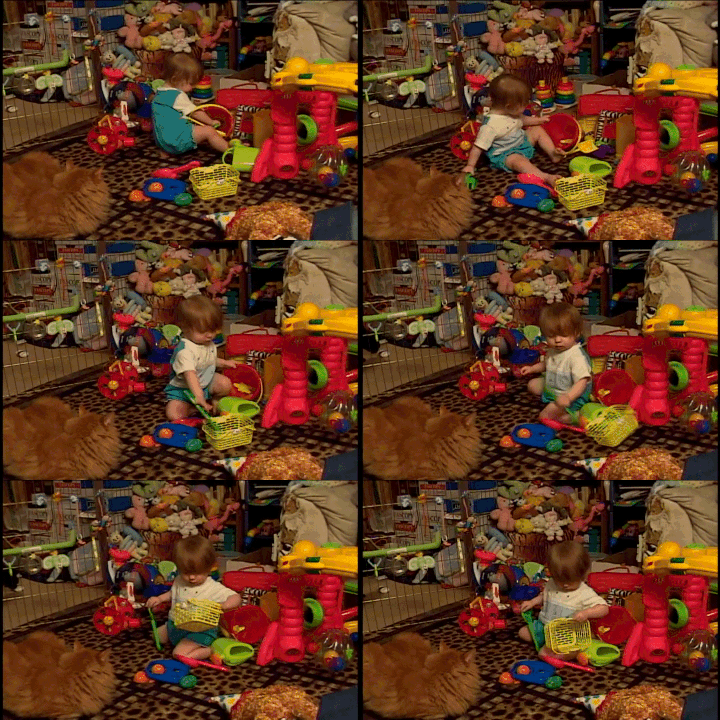
“My parents knew something was wrong, even at a young age... but no one knew the extent of what was really going on underneath the skin.”
Willow’s eyes open to a room still with darkness. The sun won’t rise for a few hours. Sitting up, they feel a familiar pain in their stomach. Another day.
They look in the mirror at the permanent bags under their eyes, eight hours can’t fix this, it is never enough.
This is Willow Martin, a 23-year-old Cornell student living in the middle of nowhere due to rising rent prices.
But Willow faces another trouble, something beneath the skin, growing, eating them away from the inside…
Willow’s schedule is planned out to the minute, narrowly squeezing in doctors’ appointments and classes all to ensure they can make the bus back to their apartment. Only bus 20 makes the journey each day, stopping only three times, if they miss one, they’re stuck until the next morning.
Willow narrowly makes it on the 5 p.m. bus, the last one of the day and begins the long way home. They attempt to complete homework on the ride, but the sun has already begun to say its goodbyes and the cabin is filled with the familiar darkness.
Pain shoots through their body, the meds are wearing off, hours away from the next dose.
As Willow arrives at home all they can do is collapse, physically exhausted from the day, yet a mountain of homework still rests beside them. They close their eyes in an attempt to regain some of the energy lost.
That’s when the suppressed thoughts break through.
Willow struggles to stand, the pain consistently shoving them back down to their resting place, their own personal cell.
They look at the clock, relief is still over an hour away. The meds only dull the pain slightly, but at least Willow can stay upright. They reach for their sketchbook, trying to find some way to pass the time.
Willow begins on another self-portrait, trying to find a way to express the invisible pain to those who cannot understand. They know the point is mute, but continue on anyway.
What else can they do?
The pain was the first thing their family noticed.
Blood curdling cries before school as early as 13. The agony began on and off at first. Doctors described it as normal period cramps and said that Willow would get used to it over time. The doctors said it was common for kids that age to overreact in such a way.
But the pain only got worse.
Test after test was run, but nothing was out of the ordinary, nothing to suggest pain to this level.
Willow learned to grin and bear the torment. What else was there to do? They hoped it would improve with time, that they would get used to the pain.
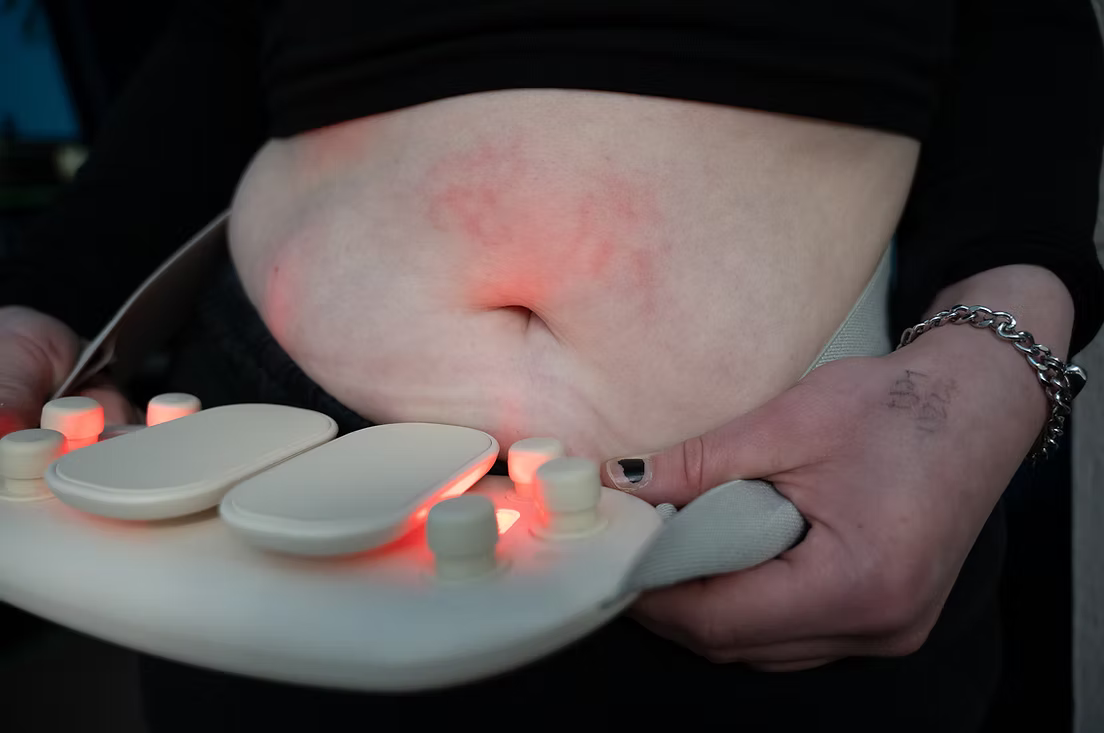
"The heating pad I need to walk leaves burn scars."
But the disease had already gotten its grasp on Willow.
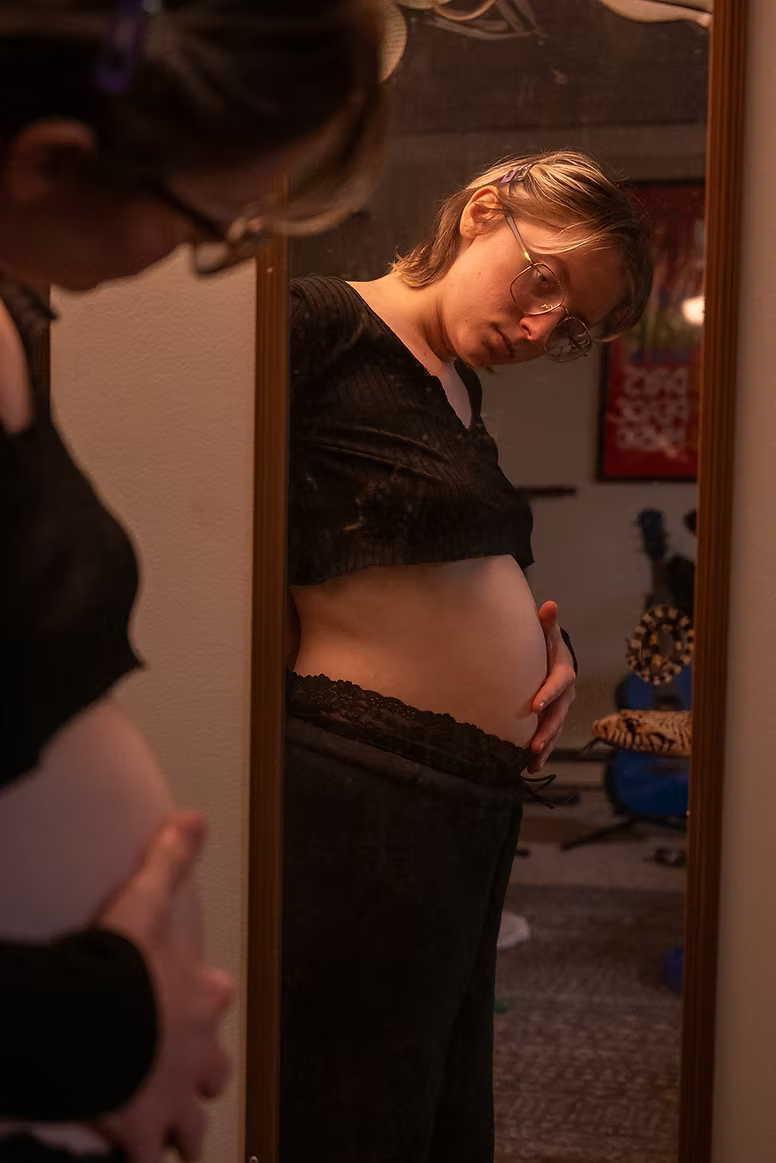
"There are things instilled in you since childhood... no man's ever going to want you if you look pregnant or can't have sex."
Willow was getting a period once a week, with pain so excruciating they became bedridden for multiple days at a time. Holding a job and keeping up with relationships began to feel impossible, and the feeling of not being able to keep up began to weigh them down.
“What is wrong with me...” became a daily mantra.
It was when Willow started college that endometriosis was first suggested. Six years after the pain had begun.
A friend had suggested looking into it, an offhanded comment that was never meant to be an official diagnosis.
But the deeper Willow looked, the more sense everything made.
The irregularity in periods, the chronic pain though all test results came back normal, the uncomfortable stabbing feeling that came along with bathroom trips.
The only way to officially diagnose someone with endo is invasive surgery into the uterus. But insurance is slow to approve surgery without a diagnosis and therein lies the problem.
Doctors wouldn’t listen. Teachers called them lazy. Bosses were less than understanding. It was like they didn’t have a voice.
Willow only knew one way to express the words that couldn’t be said.
"Art is personal... it's emotional in a way you can't express."
"I found a way to talk when no one would believe my words."
"To show them how I felt."
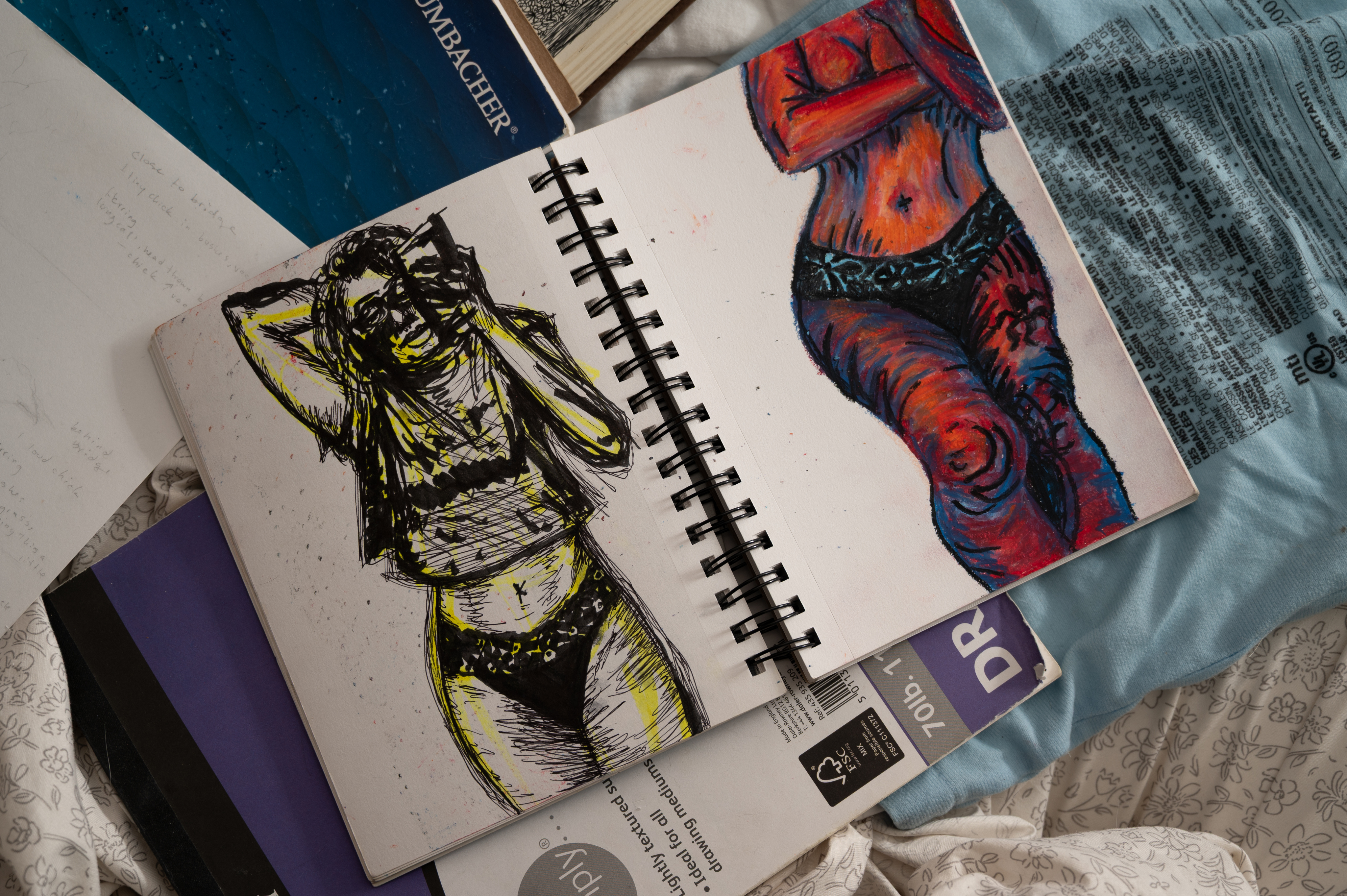
"No matter if my art was made with meaningful intent or not, it all meant something to me."
“The facts haunt me.”
Surgery is the only way to get an
official diagnosis.
Commonly misdiagnosed as normal cramps.
The cause of endometriosis is unknown, there is no way to prevent it.
Affects roughly 190 million people of reproductive age globally.
Pain may occur during urination, bowel movements and intercourse.
They recount the small white cylinders in their hand, making sure the pills are all there. Four pills in the morning, two in the afternoon and two at night, Willow knew the consequences of miscounting.
The alarm yells out; time for the first dosage. They swallow the pills quickly and run to catch the bus, throwing the remaining meds into their bag for later.
Entering the classroom, Willow feels a sharp pain in their head, a zapping sensation that seems to permeate throughout the body. They frantically search for the pill bottle... there are five left.
Their vision blurs momentarily. Grabbing around, desperately searching for something to catch their balance. Willow stumbles onto the wall next to them, shaking heavily, waiting for their vision to return.
One pill missed, two weeks of side effects to live through.
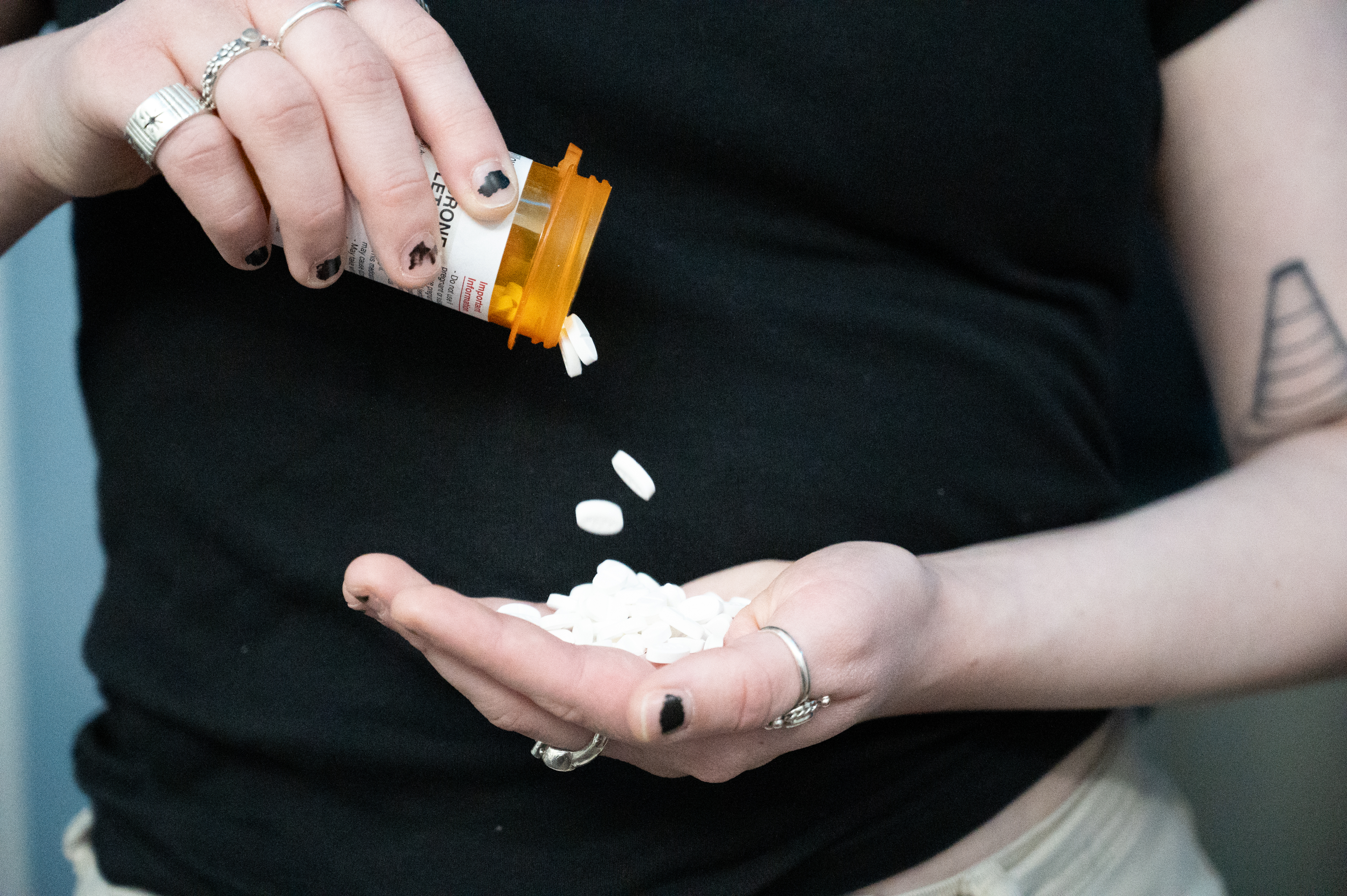
"I honestly feel like I've become a slave to my meds."
A doctor walks in the room, another name on a long list of professionals. Willow begins to speak, “I think I have endometriosis…”
The doctor cuts them off with a short laugh, “Are you sure you’re not just overreacting to period cramps? They’re very common, you know.”
Willow is unfazed and is used to this dismissal. Willow begins to describe their symptoms, how long they’ve been plaguing their body, and how they are kept awake at night by the pain.
The doctor dismisses Willow again, stating that other solutions should be tried before “jumping the gun.” Willow leaves with no new medication, no real solution and a reference to another doctor in the hopes someone will listen…
An endless cycle of pain.
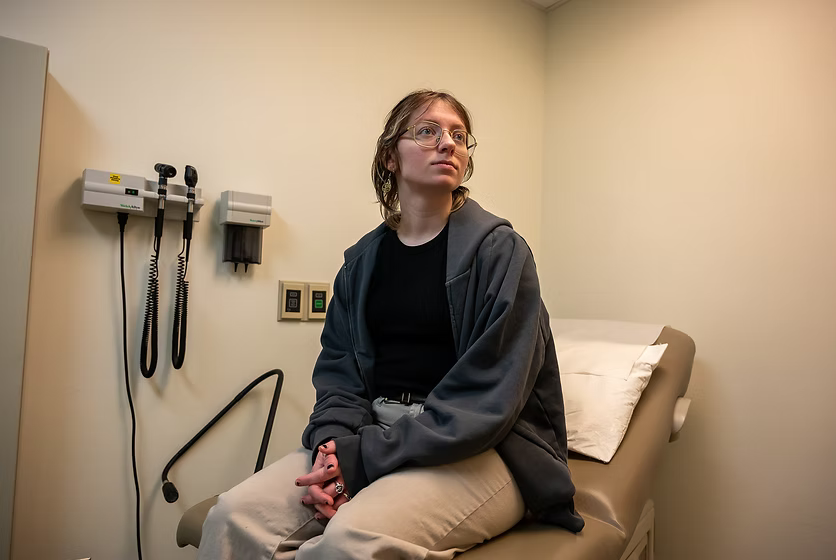
"If they're the doctor, you're the patient. Whatever they feel is true ends up being the course of treatment."
"My pain impacts my whole life, but my
life isn't just my pain."
"My art makes me feel like a real person, not just a list of symptoms."
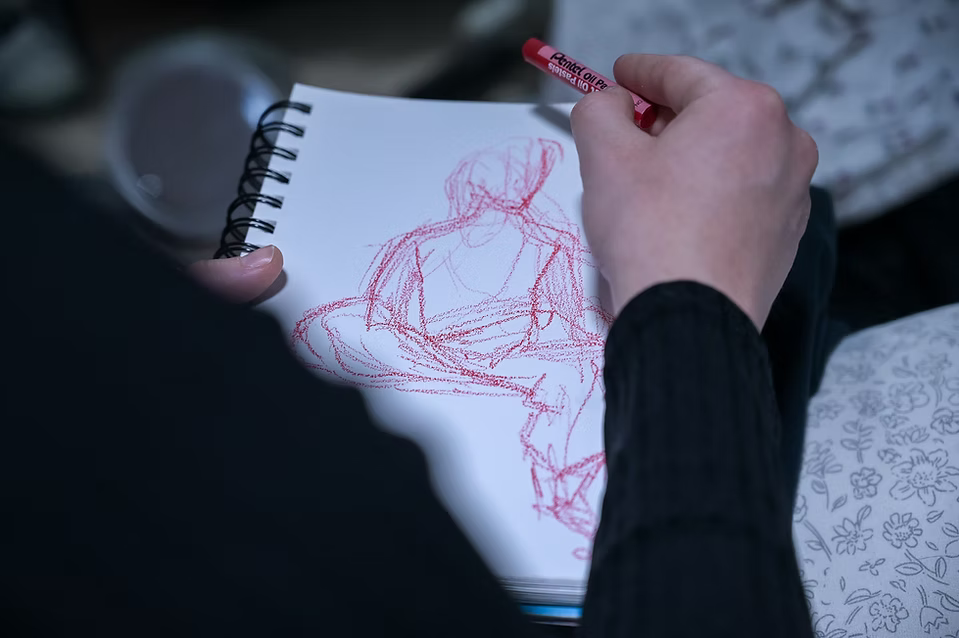
"It always felt so good to scribble on a page, to let my hand flow and see where it would take me."
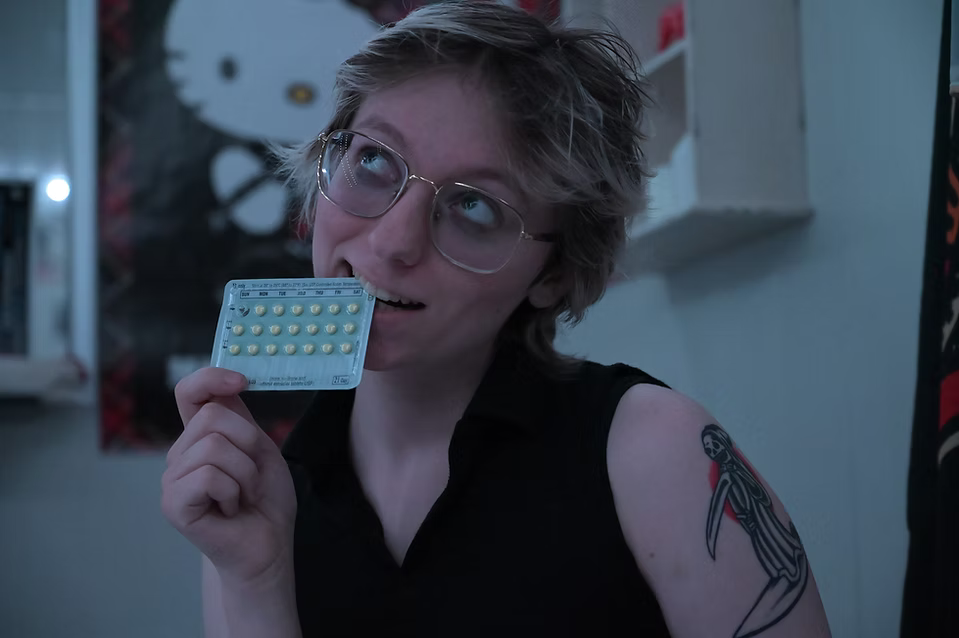
"If I had one wish I would want a cultural shift towards solving problems... for everyone, not just yourself."
"It's hard to advocate for yourself with
an invisible disease, and even harder
to get someone to listen."
"But you find ways to still enjoy
life, through art, through nature..."
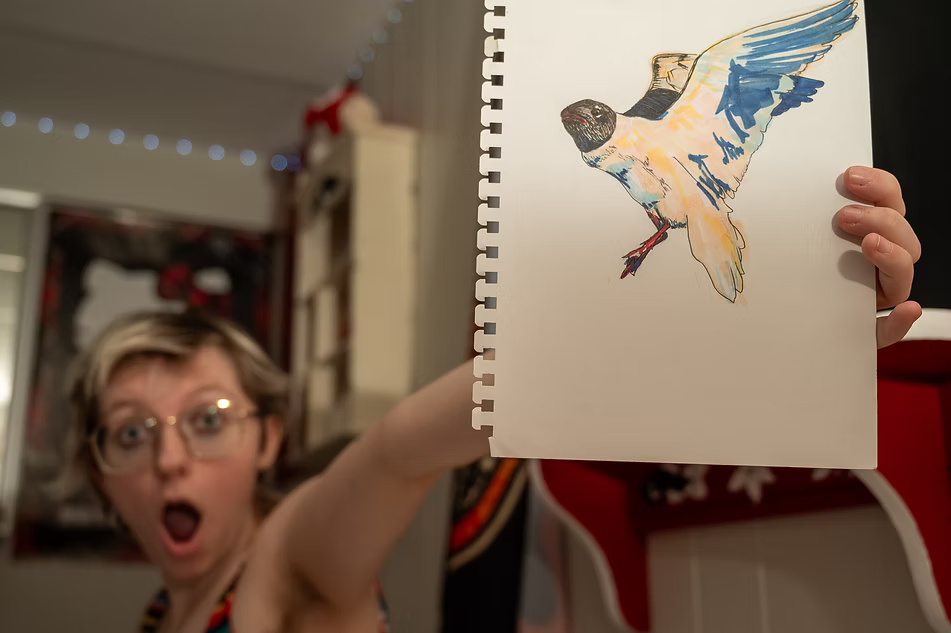
"To everyone with this disease, it can get so much better. You have to care so hard about yourself to get other people to care about you, but you can be your own best friend."
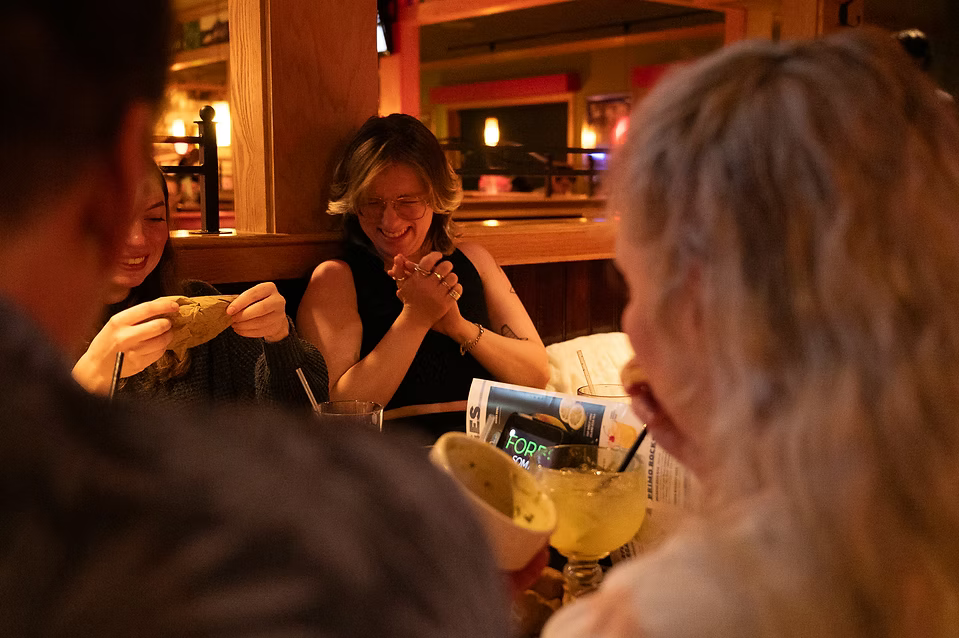
"There are still ways to be alive, and I know that's worth fighting for."
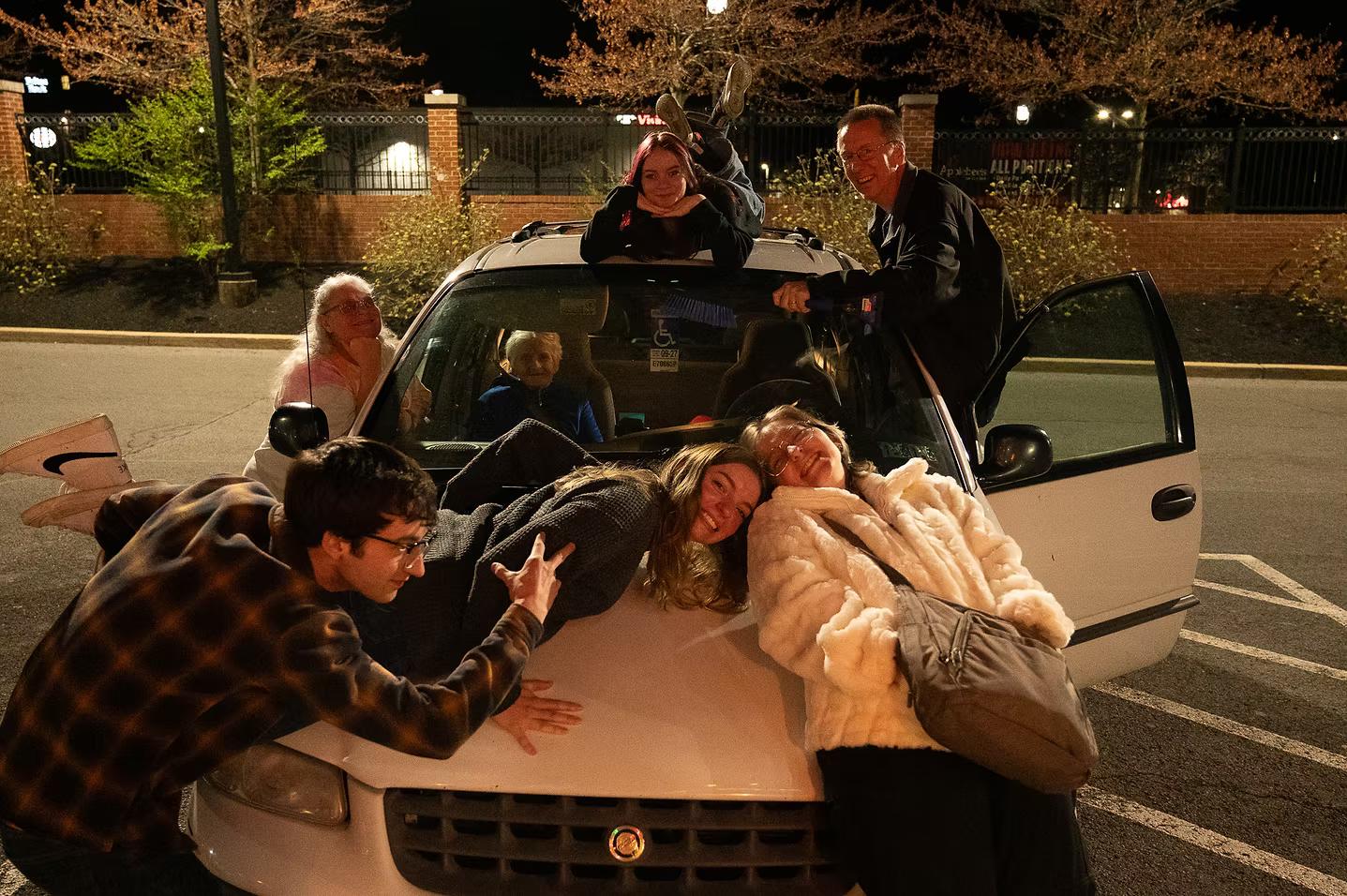
"And through the people surrounding
you, who will stand by you no matter
what."
"I'm still here."
"Endo has tried to take everything
from me... but it didn't take who I am."
A lifelong disease


Weeping Willow
Willow’s eyes open to a room still with darkness. The sun won’t rise for a few hours. Sitting up, they feel a familiar pain in their stomach. Another day.
They look in the mirror at the permanent bags under their eyes, eight hours can’t fix this, it is never enough.
This is Willow Martin, a 23-year-old Cornell student living in the middle of nowhere due to rising rent prices.
But Willow faces another trouble, something beneath the skin, growing, eating them away from the inside…
Willow’s schedule is planned out to the minute, narrowly squeezing in doctors’ appointments and classes all to ensure they can make the bus back to their apartment. Only bus 20 makes the journey each day, stopping only three times, if they miss one, they’re stuck until the next morning.
Willow narrowly makes it on the 5 p.m. bus, the last one of the day and begins the long way home. They attempt to complete homework on the ride, but the sun has already begun to say its goodbyes and the cabin is filled with the familiar darkness.
Pain shoots through their body, the meds are wearing off, hours away from the next dose.
As Willow arrives at home all they can do is collapse, physically exhausted from the day, yet a mountain of homework still rests beside them. They close their eyes in an attempt to regain some of the energy lost.
That’s when the suppressed thoughts break through.


There is no cure for what is inside Willow.
A lifelong disease
Willow struggles to stand, the pain consistently shoving them back down to their resting place, their own personal cell.
They look at the clock, relief is still over an hour away. The meds only dull the pain slightly, but at least Willow can stay upright. They reach for their sketchbook, trying to find some way to pass the time.
Willow begins on another self-portrait, trying to find a way to express the invisible pain to those who cannot understand. They know the point is mute, but continue on anyway.
What else can they do?
"It became a habit more than a hobby... it was the only thing keeping me sane."
"There are things instilled in you since childhood... no man's ever going to want you if you look pregnant or can't have sex."
Willow was getting a period once a week, with pain so excruciating they became bedridden for multiple days at a time. Holding a job and keeping up with relationships began to feel impossible, and the feeling of not being able to keep up began to weigh them down.
“What is wrong with me...” became a daily mantra.
It was when Willow started college that endometriosis was first suggested. Six years after the pain had begun.
A friend had suggested looking into it, an offhanded comment that was never meant to be an official diagnosis.
But the deeper Willow looked, the more sense everything made.
The irregularity in periods, the chronic pain though all test results came back normal, the uncomfortable stabbing feeling that came along with bathroom trips.
The only way to officially diagnose someone with endo is invasive surgery into the uterus. But insurance is slow to approve surgery without a diagnosis and therein lies the problem.
Doctors wouldn’t listen. Teachers called them lazy. Bosses were less than understanding. It was like they didn’t have a voice.
Willow only knew one way to express the words that couldn’t be said.
They recount the small white cylinders in their hand, making sure the pills are all there. Four pills in the morning, two in the afternoon and two at night, Willow knew the consequences of miscounting.
The alarm yells out; time for the first dosage. They swallow the pills quickly and run to catch the bus, throwing the remaining meds into their bag for later.
Entering the classroom, Willow feels a sharp pain in their head, a zapping sensation that seems to permeate throughout the body. They frantically search for the pill bottle... there are five left.
Their vision blurs momentarily. Grabbing around, desperately searching for something to catch their balance. Willow stumbles onto the wall next to them, shaking heavily, waiting for their vision to return.
One pill missed, two weeks of side effects to live through.
"I honestly feel like I've become a slave to my meds."
"I don't think I would still be here if I didn't have that outlet."
"The heating pad I need to walk leaves burn scars."
Blood curdling cries before school as early as 13. The agony began on and off at first. Doctors described it as normal period cramps and said that Willow would get used to it over time. The doctors said it was common for kids that age to overreact in such a way.
But the pain only got worse.
Test after test was run, but nothing was out of the ordinary, nothing to suggest pain to this level.
Willow learned to grin and bear the torment. What else was there to do? They hoped it would improve with time, that they would get used to the pain.
"No matter if my art was made with meaningful intent or not, it all meant something to me."
"Art is personal... it's emotional in a way you can't express."
"I found a way to talk when no one would believe my words."
"To show them how I felt."
"My art makes me feel like a real person, not just a list of symptoms."
"It always felt so good to scribble on a page, to let my hand flow and see where it would take me."
"If I had one wish I would want a cultural shift towards solving problems... for everyone, not just yourself."
"It's hard to advocate for yourself with
an invisible disease, and even harder
to get someone to listen."
"But you find ways to still enjoy
life, through art, through nature..."
"To everyone with this disease, it can get so much better. You have to care so hard about yourself to get other people to care about you, but you can be your own best friend."
"There are still ways to be alive, and I know that's worth fighting for."
"And through the people surrounding
you, who will stand by you no matter
what."
"I'm still here."
"Endo has tried to take everything
from me... but it didn't take who I am."
“Art is one of my few escapes.”
A doctor walks in the room, another name on a long list of professionals. Willow begins to speak, “I think I have endometriosis…”
The doctor cuts them off with a short laugh, “Are you sure you’re not just overreacting to period cramps? They’re very common, you know.”
Willow is unfazed and is used to this dismissal. Willow begins to describe their symptoms, how long they’ve been plaguing their body, and how they are kept awake at night by the pain.
The doctor dismisses Willow again, stating that other solutions should be tried before “jumping the gun.” Willow leaves with no new medication, no real solution and a reference to another doctor in the hopes someone will listen…
An endless cycle of pain.
"If they're the doctor, you're the patient. Whatever they feel is true ends up being the course of treatment."
“My parents knew something was wrong, even at a young age... but no one knew the extent of what was really going on underneath the skin.”
"My pain impacts my whole life, but my
life isn't just my pain."
“The facts haunt me.”
Surgery is the only way to get an
official diagnosis.
Commonly misdiagnosed as normal cramps.
The cause of endometriosis is unknown, there is no way to prevent it.
Affects roughly 190 million people of reproductive age globally.
Pain may occur during urination, bowel movements and intercourse.
“What is wrong with me...”
“It’s so hard to advocate for myself, people just make you feel like a child...”
“What if I am making it up, if it is really all in my head...”
“I feel so much shame talking about it...”
“I just want it to stop.”
“What do I do if it keeps getting worse?”
“If I collapsed at home in agony I’d be alone... and no one would know.”
“I want to wake up without feeling so stiff and heavy and sore for once...”
“It hurts, everything hurts.”
“I just want to feel healthy.”
“I just feel so defeated.”
“There’s this heavy pit of dread in my chest that makes it hard to breathe and swallow when I think about my future...”
“What do I do if it keeps getting worse?”
The pain was the first thing their family noticed.
But the disease had already gotten its grasp on Willow.